
From Yamanashi to Cannes: Ayana Misawa Shares the Story of Koshu and the Spirit of Yamanashi
In mid-May, as the Cannes Film Festival reached its peak, more than 1,000 filmmakers, producers and cultural figures from around the world gathered at the Hotel Martinez overlooking the Mediterranean Sea. The occasion was JAPANESE NIGHT in Cannes 2026, an international cultural exchange event dedicated to sharing Japanese culture with a global audience.
Standing on stage in traditional Japanese attire, Ayana Misawa, Director of Chuo Budoshu Co., Ltd., took the microphone while reflecting on the vineyards of Akeno in Hokuto City, Yamanashi Prefecture, far from the glamour of the Côte d’Azur. A winemaker who has spent years cultivating grapes on the hillsides of Akeno at an elevation of 700 metres and exploring the potential of Koshu, Japan’s historic indigenous grape variety, Misawa spoke not only of wine, but of the scent of the soil, the sound of the wind, and the spirit of craftsmanship that underpins Japanese culture.
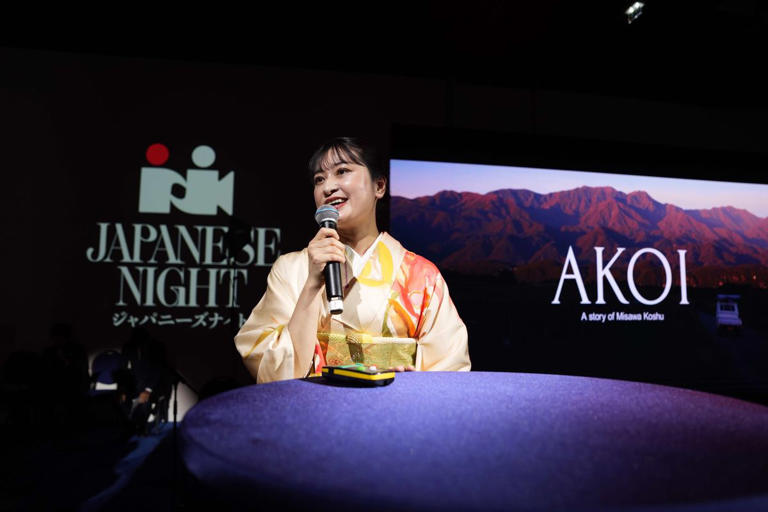
■ A Special Year with Japan in the Spotlight
The 2026 Cannes Film Festival marked a special year for Japan, which was named Country of Honour at Marché du Film, the festival’s international film market. Against a backdrop of growing international interest in Japan’s film industry, JAPANESE NIGHT—founded in 2024 by actress and producer MEGUMI—focused this year on “People, Products and Stories,” highlighting the individuals, craftsmanship and cultural values behind Japanese creativity.
Among the speakers was director Taichi Kimura, whose film FUJIKO received both the Grand Prize and the Audience Award at the Udine Far East Film Festival. Misawa also joined the programme as a featured speaker. Her participation stemmed from her appearance in AKOI, a short documentary produced by MEGUMI and directed by Kimura in 2024.
■ A Vineyard Philosophy Captured in AKOI
AKOI is a term that reflects the attentiveness and pride of growers who visit their vineyards day after day. Rather than relying solely on fertilisers to build soil fertility, it expresses the belief that meaningful viticulture begins with a continuous dialogue with the land itself.
Filmed in the vineyards of Akeno, Hokuto City—also known as a filming location for the 2004 Japanese film Be with You—the documentary follows Misawa’s daily work and her approach to winegrowing and winemaking.
Looking towards the mountains, feeling the wind, listening to birdsong and sensing the aromas of surrounding vegetation—these small but continual observations of each vine form the foundation of what Misawa describes as winemaking that expresses its terroir. AKOI captures this philosophy on film, and through that connection, the story of Yamanashi wine found its way to Cannes.
■ A Thousand-Year-Old Variety Poured on an International Stage
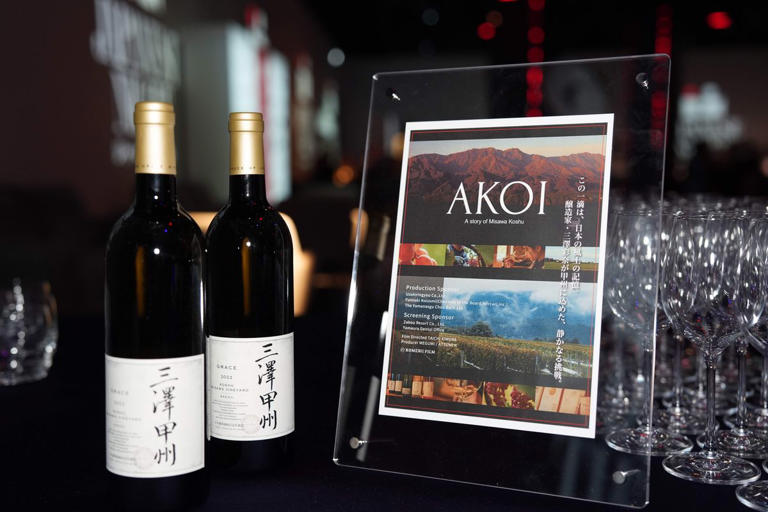
Guests at the event were served Misawa Koshu.
Koshu, believed to have a history spanning more than a thousand years, is widely regarded as Japan’s signature indigenous grape variety. Since its founding in 1923, Chuo Budoshu has dedicated itself to exploring the variety’s potential and elevating its quality and international reputation.
In 2014, Cuvée Misawa Akeno Koshu 2013, produced from estate-grown Koshu grapes at Misawa Vineyard in Akeno, became the first Japanese wine to receive a Gold Medal at the Decanter World Wine Awards. Following further research and refinement, the wine was reintroduced in 2020 as Misawa Koshu, with an even greater focus on expressing the distinctive character of its origin.
■ Comment from Ayana Misawa
“JAPANESE NIGHT was not simply an occasion to present Japan to the world. It was a place of genuine international exchange, where people from diverse backgrounds gathered with mutual respect.
I felt deeply honoured to have the opportunity, on a special evening celebrating creators and makers from many different fields, to speak about Yamanashi wine and Koshu, Japan’s indigenous grape variety.
Misawa Koshu is a wine born from a close dialogue with the terroir of Yamanashi—looking towards the mountains, feeling the wind, listening to birdsong and sensing the aromas of the surrounding landscape.
I believe that film and wine share a common beauty: the spirit of the creator resides within the work, and its resonance continues long after the viewing or tasting experience has ended.
This experience reaffirmed my aspiration to express the beauty of Japanese craftsmanship and sensibility through wine.”
